
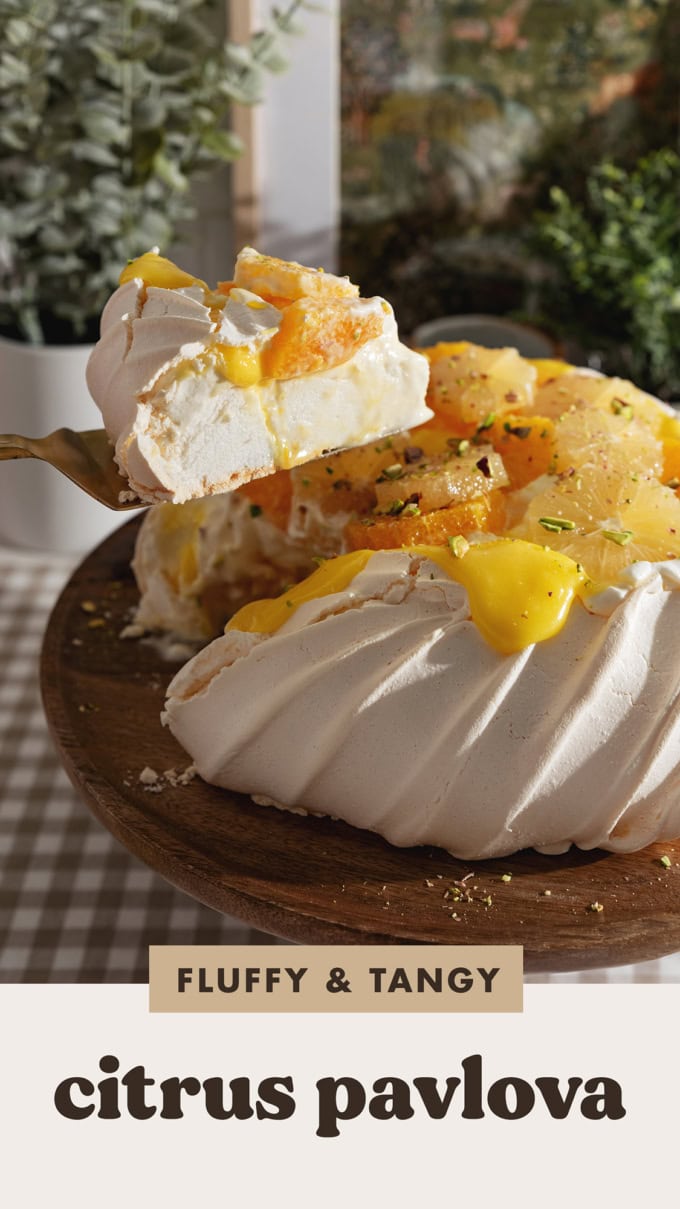
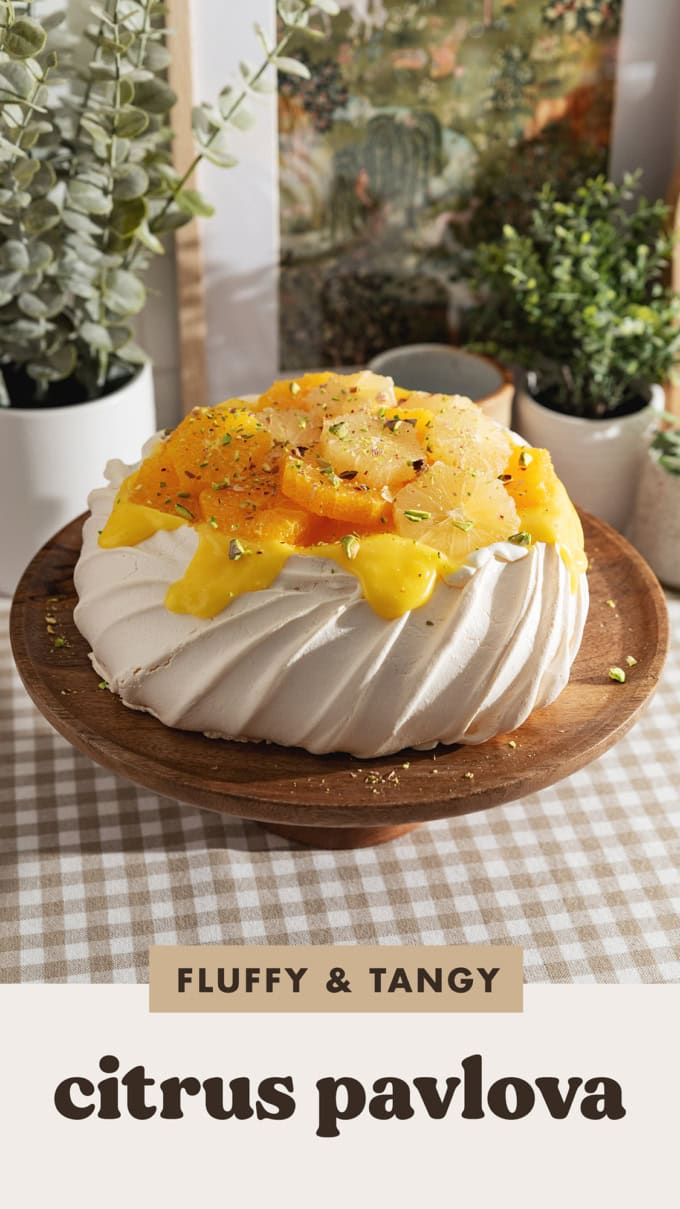
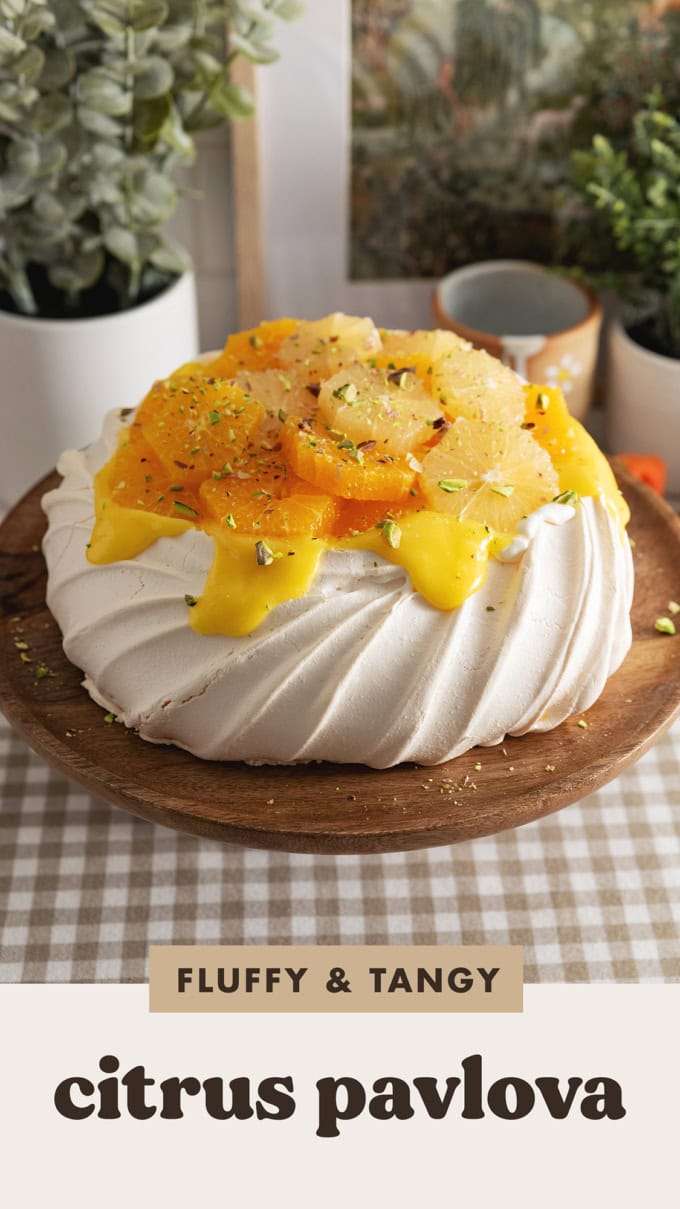
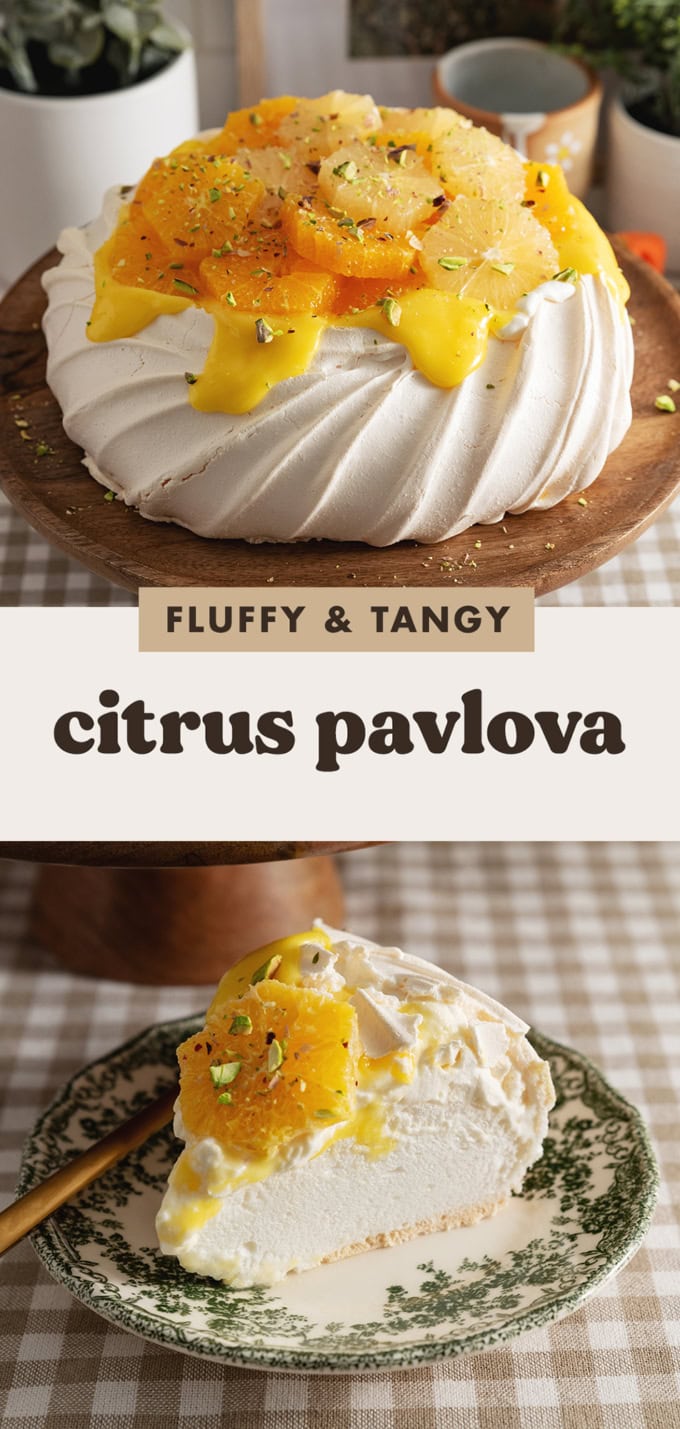
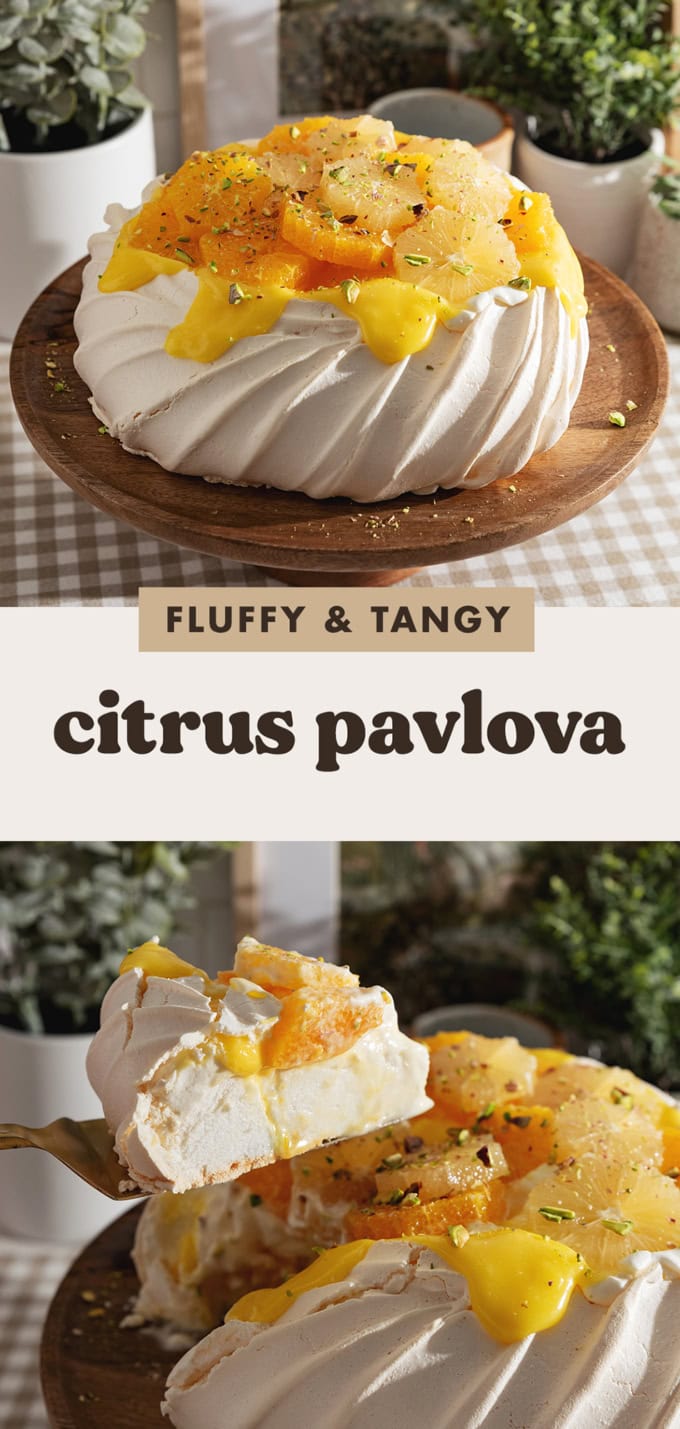
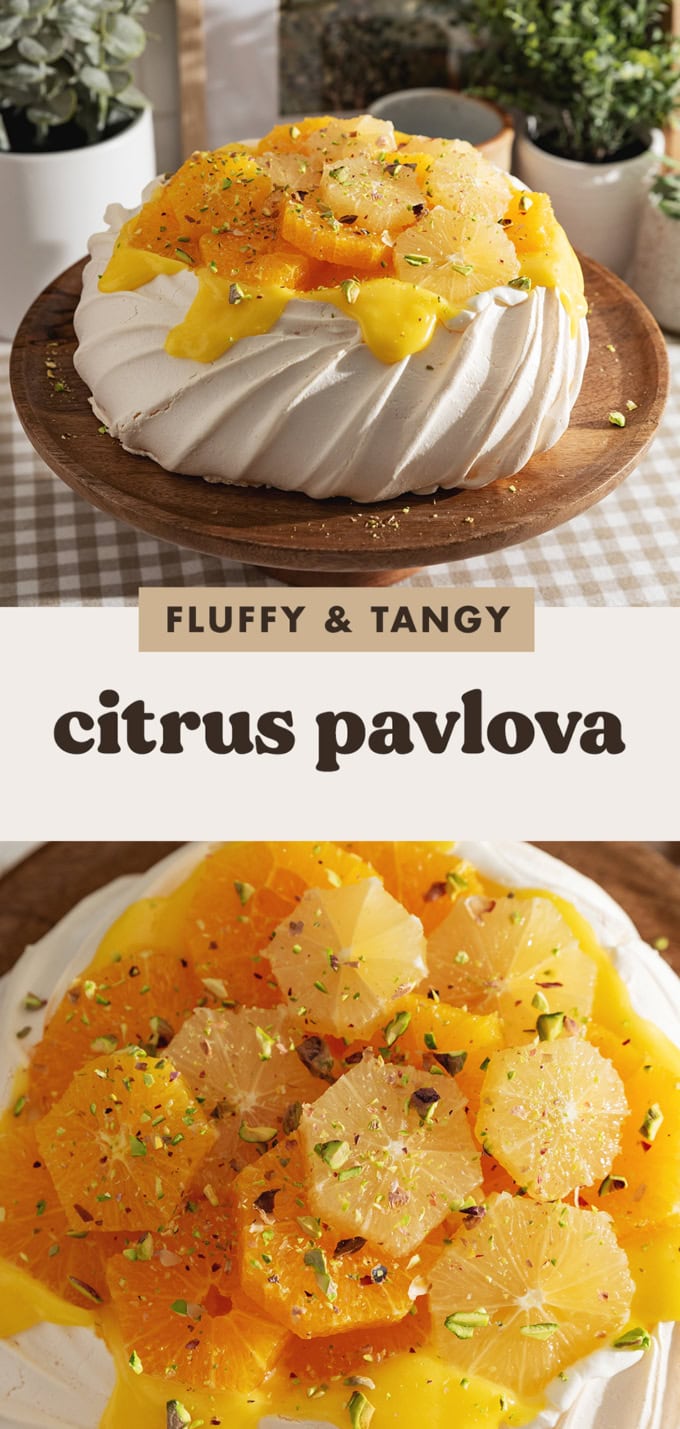
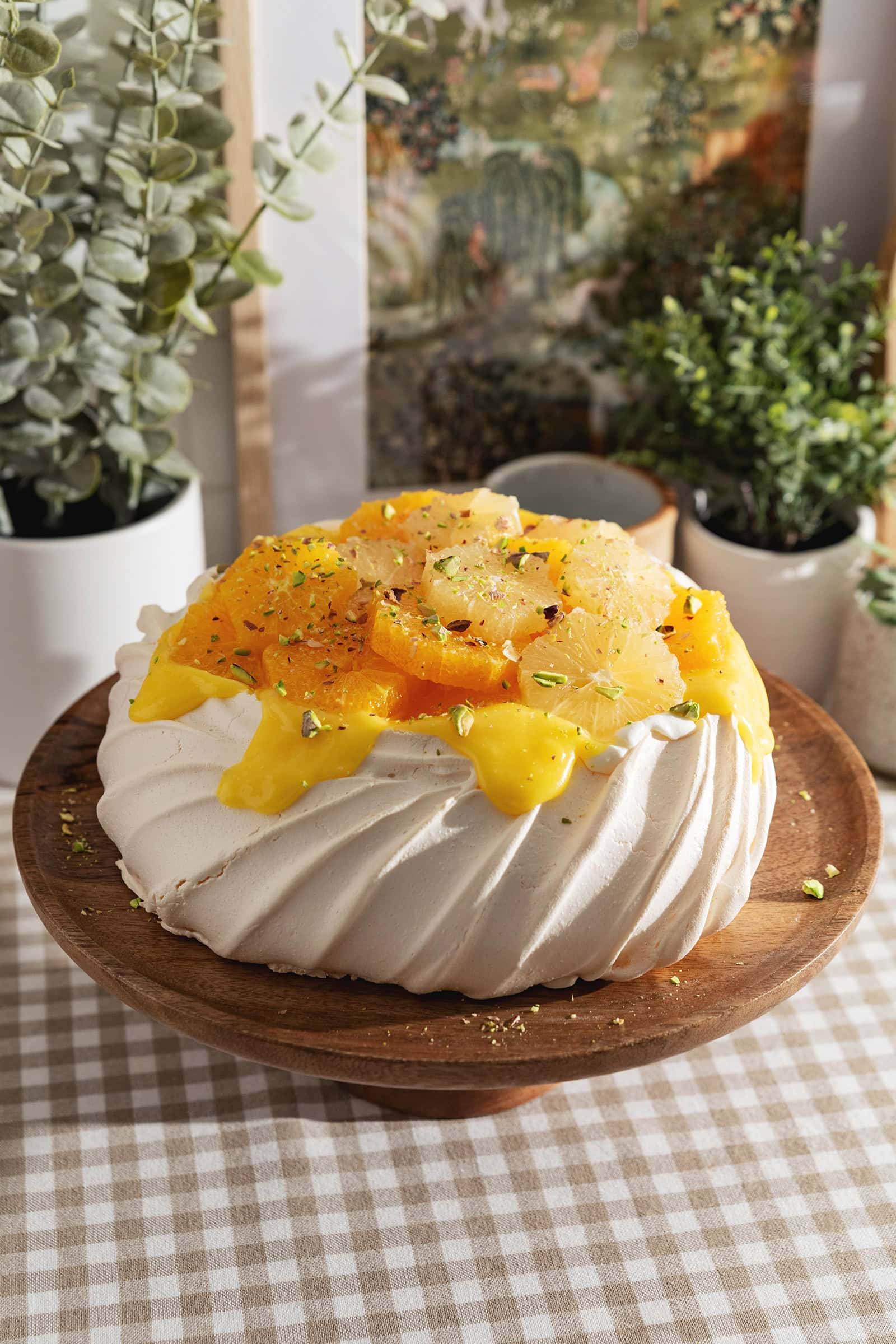
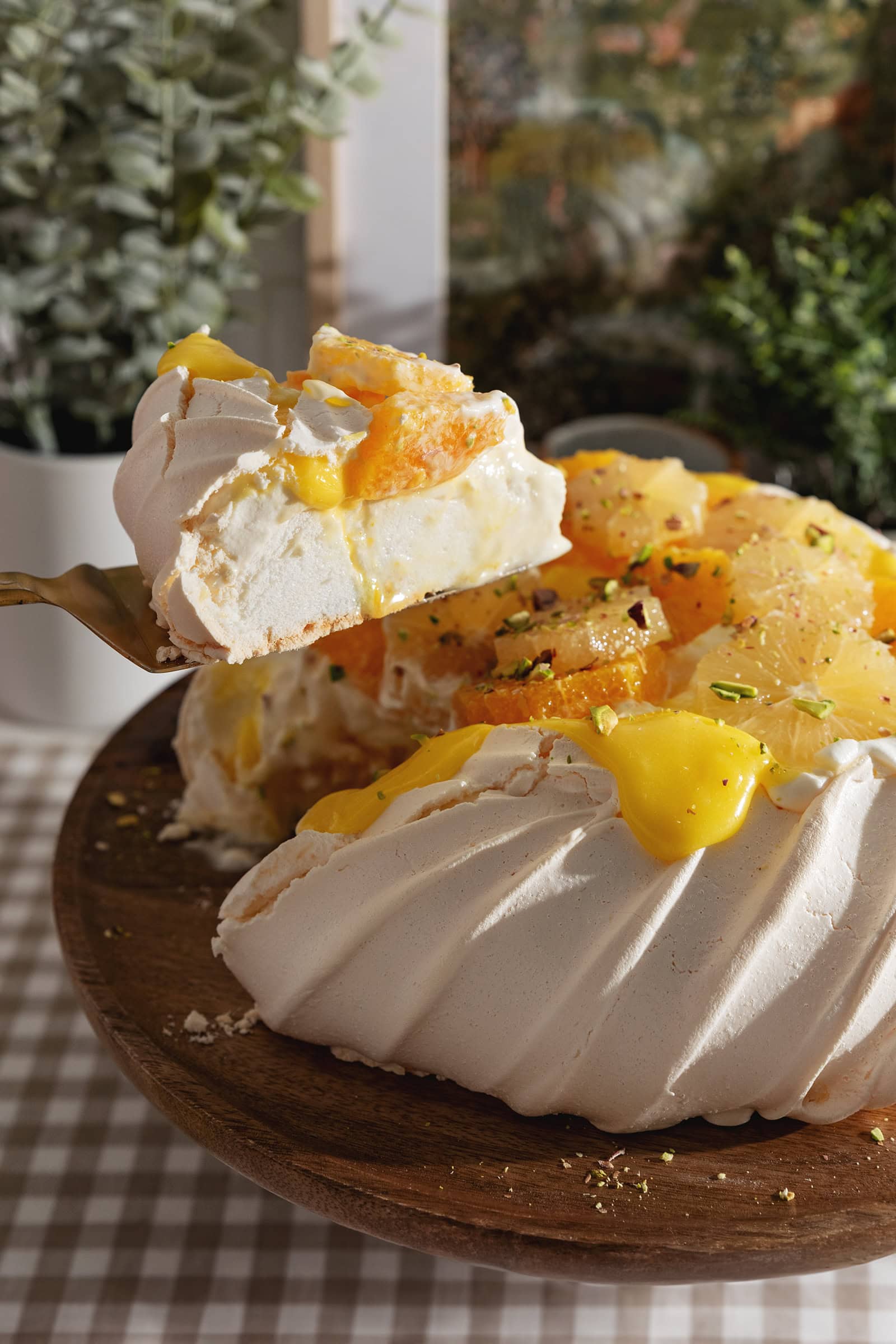
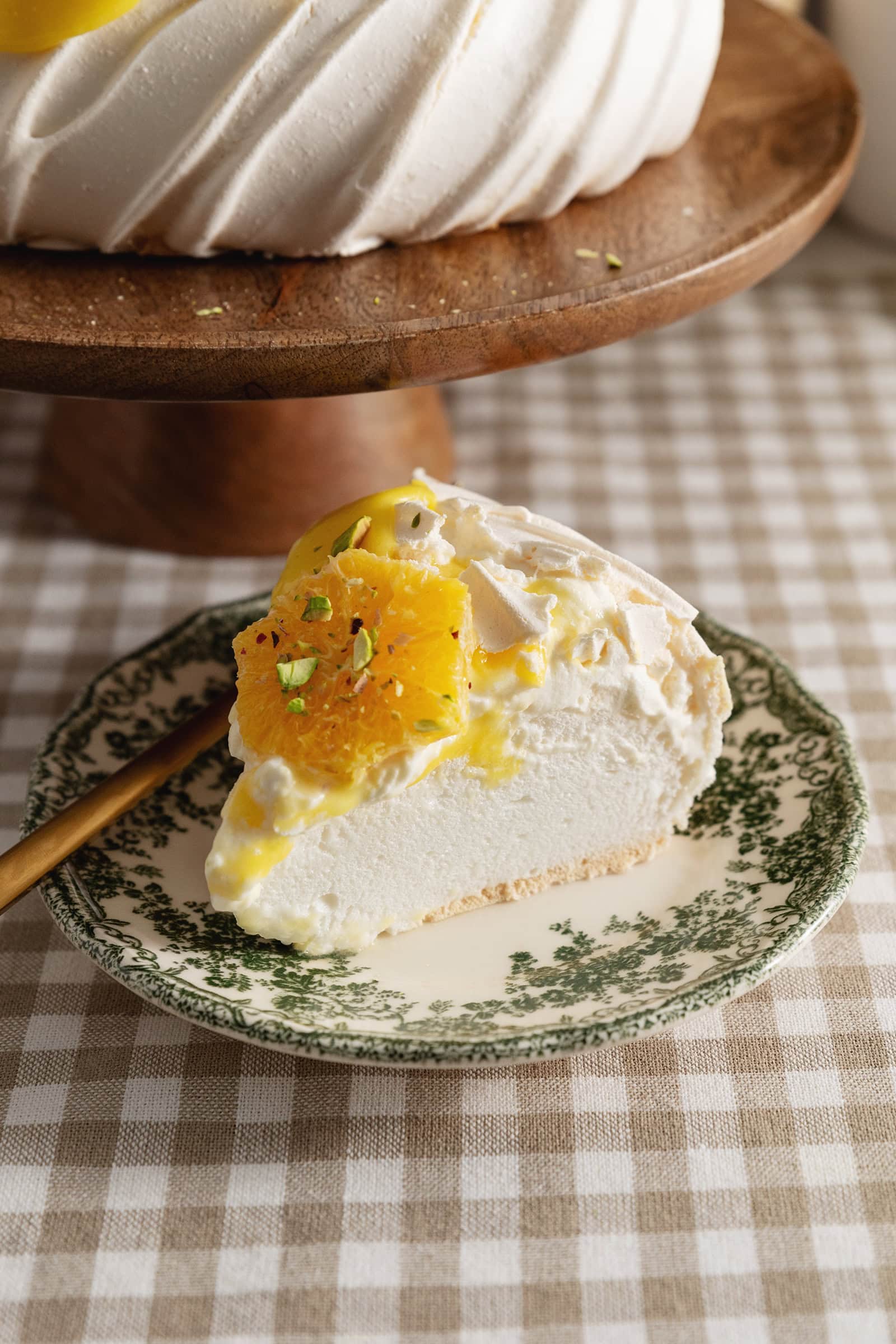
This citrus pavlova features a crunchy melt-in-your-mouth exterior with a fluffy, marshmallowy interior. It's filled with lemon curd, whipped cream, and your favourite citrus fruits!
Jump to:
Notes from the baker
Tart and juicy citrus fruits pair perfectly with the sweetness of pavlovas. The lemon curd, especially, adds so much flavour and intensity to the light and delicate pavlova shell. This has to be one of my favourite pavlova combinations ever.
Every time I make a pavlova, I'm always weary of the egg yolks leftover that I have to find another use for or in my case, leave in my fridge and forget about them. This recipe is great because we're using all of the egg yolks to make the lemon curd! Win-win.
Why you'll love this recipe
- Fluffy marshmallow-y meringue. The inside of the pavlova is perfectly fluffy like a cloud.
- Light and airy whipped cream. No pavlova is complete without fresh whipped cream to pair with this delicate dessert.
- Tart lemon curd. The lemon cuts through the sweetness of the pavlova and adds a punch of flavour.
- No egg yolks leftover. This recipe uses both the egg whites and the egg yolks in equal amounts so you won't be left with any excess.
Tools
- Electric hand mixer - A hand mixer is essential for whipping up the egg white meringue. You don't want to be doing this by hand - it will take forever! You can also use a stand mixer if you have one.
- Baking sheet - Use any baking sheet or baking tray that is big enough to fit an 8" pavlova.
- Skillet - Use any small skillet or pot to make the lemon curd on the stovetop. Since we're making a small amount of lemon curd, it's best to use a small-sized skillet to prevent overcooking it.
- Fine mesh sieve - This is optional but I highly recommend it for straining the lemon curd to achieve a smooth and silky curd.
Ingredient notes
As always, the full recipe card with ingredient amounts and instructions is at the bottom of this post! Keep reading for more details on each ingredient or skip ahead to the recipe.
- Eggs - You'll need to separate the egg whites from the egg yolks. The egg whites will be used for the pavlova shell and the egg yolks will be used for the lemon curd. Be careful not to get any of the yolks into the egg whites at all otherwise the meringue won't whip up properly.
- Cream of tartar - This is an acidic powder that helps stabilize the meringue so that it holds its stiff peaks and whips up faster.
- Granulated sugar - You can use granulated sugar or caster sugar (more finely ground granulated sugar). Caster sugar works better because it's easier to dissolve but I've always used granulated sugar with decent results.
- Cornstarch - Cornstarch helps absorb any excess moisture and helps create the marshmallow-like centre of the pavlova.
- Vanilla extract
- Lemon juice - You'll need the juice of about 1 lemon but you can add more if you prefer a lemon curd that's more tart.
- Unsalted butter - This should be at room temperature and roughly cut into cubes.
- Whipping cream
- Citrus fruits - Use your favourite citrus fruits! Oranges, grapefruits, blood oranges, or meyer lemons work well. Slice the peels off of them and be sure to pat them dry before adding them to your pavlova.
Tips for making the best citrus pavlova
- Use a clean mixing bowl and don't get any yolks in the egg whites. Even a bit of egg yolk or any leftover grease on the bowl can prevent the egg whites from whipping up to stiff peaks. When in doubt, re-wash your bowl or wipe it down with a bit of vinegar before adding the egg whites.
- Have patience when whipping the meringue. This process does take some time but the key to not to rush it! If you add the sugar to the egg whites too early, it can throw off the stability of the egg's structure. If you add the sugar too quickly, it may leave undissolved sugar in the meringue that seeps out as syrup when you bake it. It can be tempting to turn the speed up on your hand mixer to achieve stiff peaks faster, but this can also break down the structure of the eggs and create air bubbles that are too big.
- Bake low and slow with a burst of heat at the beginning. The initial burst of heat sets the exterior of the pavlova. Baking it for a long time at a low heat gently sets the interior of the pavlova and lowers the chance of it cracking or browning. Think of it as "drying out and setting" the pavlova rather than "baking" it.
- Let the pavlova cool in the oven overnight. I recommend baking your pavlova at night so that you can leave it to cool inside the oven overnight. You can fill and serve it the next day. This allows the pavlova to dry out and firm up further with the residual heat from the oven and prevents exposing it to extreme temperature changes which can create cracks.
- Don't overcook the lemon curd. The lemon curd will continue to thicken after you add the butter and as it cools. It's done cooking when it's still very fluid but thick enough to coat your spatula without immediately dripping off like water. It takes some experience to know when it's at the correct consistency but once it's at this stage, take it off the heat to prevent thickening it too much. If you end up with a small amount of very thick and firm lemon curd, it was likely overcooked.
Storage
This citrus pavlova should be enjoyed immediately after assembling or at least within the same day. If you're not serving immediately, it can be covered with an overturned mixing bowl and stored in the fridge.
Leftovers can be kept covered or in an airtight container in the fridge for up to 3 days but keep in mind that the moisture from the filling and the fruits will eventually soften and dissolve the shell of the pavlova.
Frequently asked questions
Baking by weight is much more accurate than volume. When using US standard cups, ingredients like flour and sugar can easily be overpacked into the cup causing you to add too much of certain ingredients. Recipes with weight measurements are also easier to scale to smaller or bigger batches without dealing with weird fractions. To measure by weight, you simply need a kitchen scale which you can usually pick up for less than $20.
Small measurements are given in tablespoons and teaspoons because most kitchen scales are not accurate under about 10g. Tiny amounts like a ¼ teaspoon may not register accurately unless you have a drug scale. Mixing these measurements is a common practice among other recipe sites and commercial kitchens.
More pavlova recipes to try
- Mango Passionfruit Pavlova
- Blackberry Pavlovas
- Blood Orange Pavlovas
- Sugared Fruit Christmas Pavlova
Recipe
Citrus Pavlova
Equipment
- 1 skillet
Ingredients
Pavlova
- 6 large egg whites, save the yolks for the lemon curd
- ½ teaspoon cream of tartar
- 250 g granulated sugar
- 1 tablespoon cornstarch
- ½ teaspoon vanilla extract
Lemon Curd
- 6 large egg yolks
- 80 g granulated sugar
- 55 g lemon juice, about 1 large lemon
- 50 g unsalted butter, room temperature and cubed
Filling
- 300 g whipping cream
- 1 teaspoon vanilla extract
- 2 citrus fruits of your choice, sliced and pat dry
- pistachios, crushed, for sprinkling (optional)
Instructions
Pavlova
- Prep: Preheat oven to 250°F. Line a baking sheet with parchment paper and set aside.
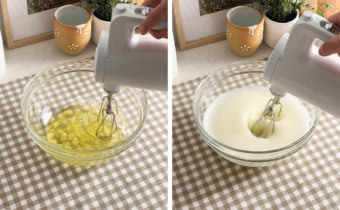
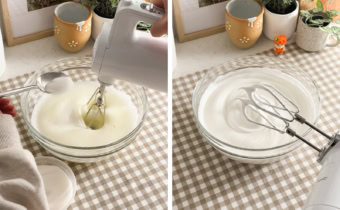
- Beat egg whites: In a large mixing bowl, add the egg whites and cream of tartar. Use an electric hand mixer on low-medium speed to beat until it becomes frothy soft peaks.

- Whip to stiff peaks: Slowly sprinkle in the sugar, one spoonful at a time, mixing very well in between each addition. Once all the sugar has been added, continue beating on medium speed until the mixture becomes glossy stiff peaks. Rub a small amount in between your fingers - it should not feel gritty.
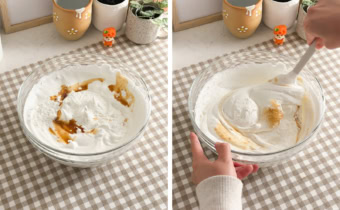
- Fold: Sprinkle in the cornstarch and vanilla extract and fold it into the meringue a few times until distributed.
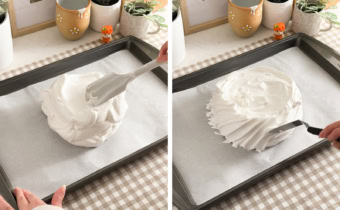
- Shape: Pile the meringue onto the middle of your lined baking sheet. Use a spatula to flatten the pile down slightly and run the spatula around the sides to shape it into a round disc shape. You can leave it like this or drag an offset spatula up the sides of the meringue to make a ridged pattern.
- Bake: Bake at 250°F for 10 minutes and then turn the temperature down to 225°F (without opening the oven door) and bake for another 1.5 hours. Turn off the oven and let the pavlova sit inside the oven for another 1 hour or overnight until completely cool.
Lemon Curd
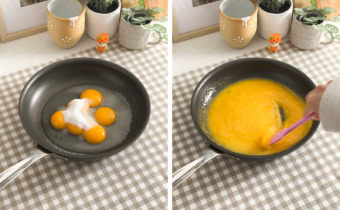
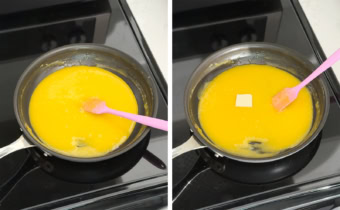
- Stir: In a small skillet, add the egg yolks, sugar, and lemon juice. Stir to combine.
- Thicken: Heat the mixture on the stovetop on low-medium heat, stirring often, until it thickens enough to coat the spatula or the back of a spoon. Remove it from the heat and stir in the butter cubes, one cube at a time, until melted and combined.
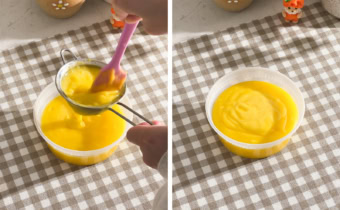
- Strain: Push the lemon curd through a small fine mesh sieve to remove any bits of cooked egg or lemon seeds for a smooth curd. Let it cool completely at room temperature or in the fridge.
Filling
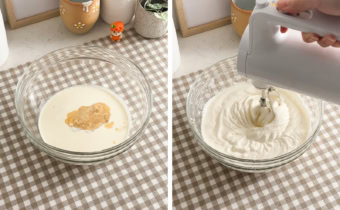
- Whip cream: In a medium mixing bowl, add the whipping cream and vanilla extract. Use a hand mixer or a whisk to whip until it becomes soft to firm peaks, depending on your preference.
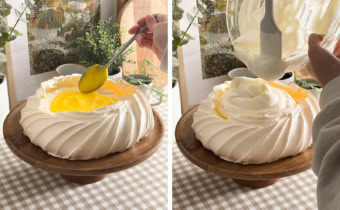
- Fill pavlova: Use the back of a spoon to break the top of the pavlova if it hasn't sunken down by itself already. Spread half of the lemon curd inside the pavlova. Fill the cavity with the whipped cream.
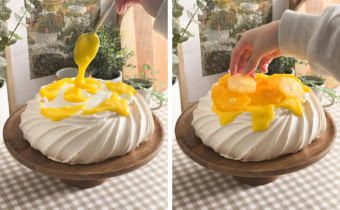
- Toppings: Pour the rest of the lemon curd on top of the whipped cream. Arrange citrus slices on top of the pavlova. Sprinkle with crushed pistachios (optional). Serve immediately or within the same day.

Leave a comment or review